
What I Understand Now About My Mother
A reflection on love, imperfection, and the women who help shape us

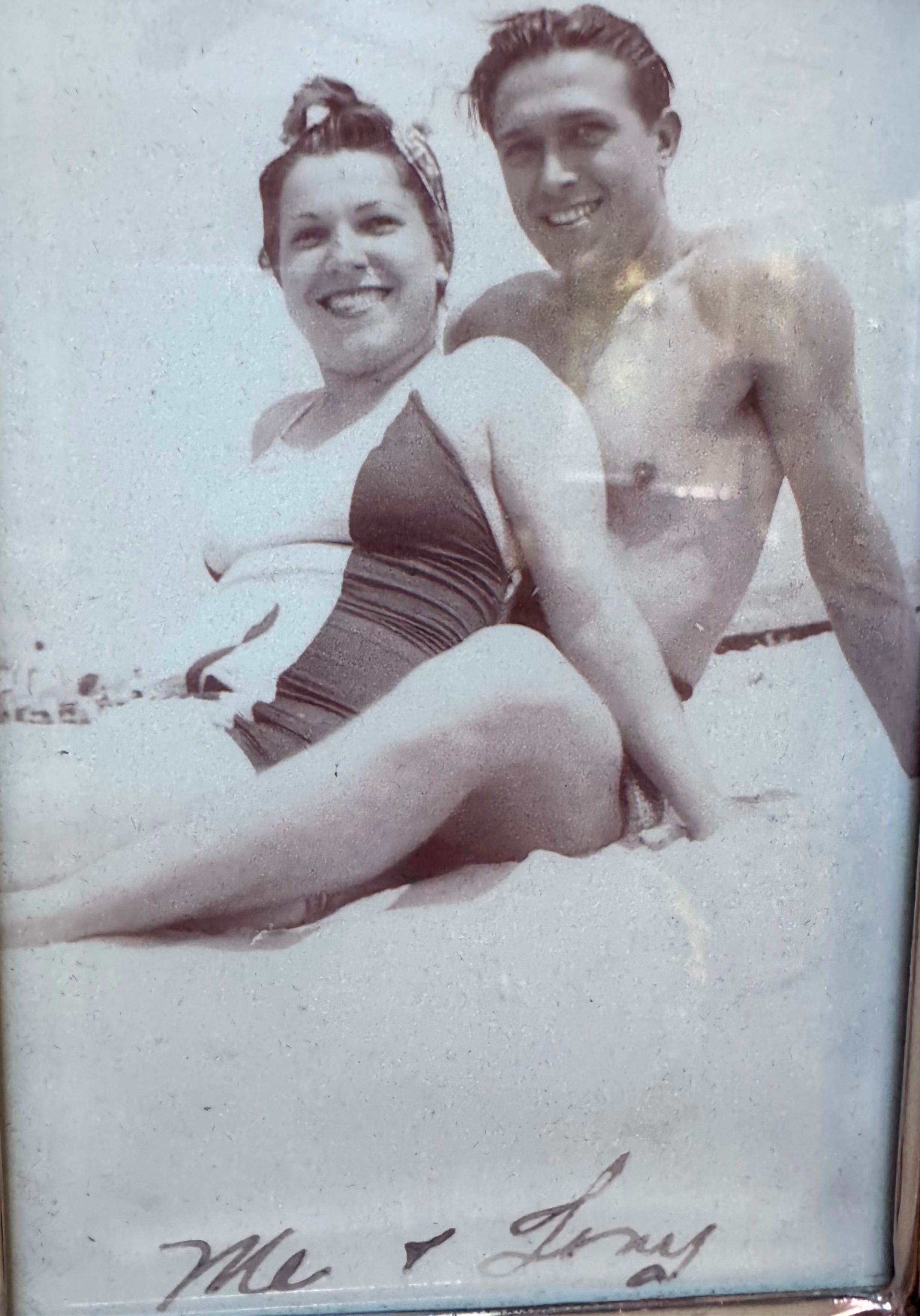
My mother was Kitty Siciliano.
She wore black cat-eye glasses with rhinestones and, for most of my childhood, had platinum blonde hair—set once a week at the hairdresser and sprayed into place so it wouldn’t move. At night, she wrapped it in toilet paper and wore a little cap to bed to preserve her bouffant.
This was the 60s. This was normal.
I didn’t think much of it then.
Now I smile just picturing it.
I live at the beach now, and I am forever grateful to my mother for that.
Kitty took us—my two sisters and me—to the beach almost every day in the summer. Not before we made our beds, cleaned up breakfast, packed our lunches, and helped plan dinner. Then we’d pile into the car and head to Jones Beach, to the same stretch of sand at Zach’s Bay, where her circle of friends gathered like clockwork.
She had a gift for friendship. Not just having friends—but enjoying them.
There was always laughter. Always a sense that life was meant to be lived, not just managed.
Her friends were a mix—some her age, some not. One woman, also named Kitty, stood out to me as a child. She wore gold lamé bikinis, backless shoes, and strutted past the lifeguards like she was on a runway. I was mortified.
My mother? She thought she was fabulous.
That tells you a lot about Kitty.
As a teenager, I was less charmed.
On Saturday mornings, when all I wanted was sleep, I’d hear her on the phone—loud, animated, right outside my door. It drove me crazy.
Like most daughters, I went through my season of separating… pushing… figuring out who I was apart from her.
She would say, “When you have your own daughter, you’ll understand.”
I didn’t believe her.
Of course, she was right.
The day my daughter Julia was born, I knew I was in trouble.
The composed, career-focused woman I thought I was… dissolved. I became emotional, tender, completely undone by love. It was the happiest day of my life.
Later, through marriage, I was given another gift—a “bonus” daughter, Jeaneen, a son-in-law, Cosmo and a grand-son, Connor.
And somewhere along the way, I began to understand my mother in a way I never could as a young woman.
There is something about a mother’s love that, even now, catches in my throat.
My mother died too early—at 62.
Julia never got to meet her.
That has always made me a little sad.
We spoke of her often, though. We called her “Grandma Kitty,” and I tried to bring her to life through stories.
One day, when Julia was about five, we were on an airplane. She looked out the window and said, very matter-of-factly,
“I think I just saw Grandma Kitty saying hello from heaven.”
And somehow… I think she did.
Mom, I’m sorry I gave you such a hard time when I was trying to find myself.
You died before I could fully appreciate you as an adult.
But I remember.
I remember how much you loved me—not just in the big things like those endless beach days, but in the quiet, consistent ways.
You showed me how to be a friend.
How to welcome people.
How to create a home that felt alive.
You loved your husband well. I watched you light up when my dad came home—fresh lipstick, joy in your voice, respect in your presence. That shaped me more than I realized at the time.
And I loved that you had your own life.
Wednesday night poker in the basement—with a real poker table, whiskey sours with little umbrellas, and you in a green poker visor—was legendary. You laughed. You played. You didn’t make your world small.
You were devoted to us.
But you were not defined only by us.
And that, too, was a gift.
As I’ve grown older, I’ve come to believe something we don’t say enough:
We don’t get perfect parents.
We get real ones.
And maturity—emotional, relational, even spiritual maturity—is learning to hold the whole story.
The love.
The limitations.
The things we wish had been different.
Honoring our parents doesn’t mean pretending everything was ideal.
It means choosing to see clearly… and still be grateful for what was given.
There’s something else I’ve come to understand over time.
When we lose our mothers—or when the relationship was incomplete in some way—life has a way of offering us something unexpected.
Women.
Friends.
The ones who show up in different seasons and, often without realizing it, meet us right where we need it most.
Some are mothers. Some are not.
But they carry a kind of maternal presence nonetheless.
They listen.
They tell the truth.
They celebrate us—and when necessary, they give us the gentle (or not-so-gentle) nudge to grow up, step up, or move forward.
I’ve had women and men in my life who have done all of that for me.
They have offered wisdom, perspective, laughter, and at times, a well-timed kick in the pants—something my mother would have fully appreciated.
And I am deeply grateful.
Because while no one replaces a mother…
there is something profoundly comforting in realizing that we are not left without guidance, without care, without love.
Sometimes it just comes in a different form.
To those of you reading this—your story may look different.
Some of you had mothers who loved you beautifully.
Some of you didn’t.
Most of us live somewhere in between.
But if you can, over time, do the work of understanding… of integrating… of honoring what was good without denying what was hard… something shifts.
You become freer.
And you pass something better on.
To my children,
Being your mother, step-mother and grandmother has been one of the greatest privileges of my life.
If I’ve given you anything of value, I hope it’s this:
You were deeply loved.
Not perfectly—but truly.
And I am happy to see you are building lives that are full—of love, friendship, joy, and purpose. Lives that are bigger than any one role… and grounded in what matters most.
Mom… this one’s for you.
Not because it was perfect.
But because it was ours.
We don’t get perfect parents. We get real ones.
And over time, we learn what it means to honor them—with truth, with grace, and with gratitude.